
Most Home Sales Close. Here’s How To Help Keep Yours on Track
Selling your home can come with plenty of moving parts. One of the biggest concerns sellers have is whether their sale will actually make it all the way to closing.
The good news is that most homes that go under contract do make it to the closing table.
According to Redfin, approximately 13.7% of home-sale agreements nationwide were canceled in January 2026. That means more than 86% of homes that went under contract during that month successfully moved forward rather than falling out of contract.
While there are factors that can happen during a transaction that are outside a seller’s control, there are also steps you can take before and during the sale to help reduce avoidable surprises.
Why Some Deals Fall Apart Before Closing
Every real estate transaction is different, but Redfin data and agent surveys point to several common reasons a pending sale may not make it to closing.
Inspection or Repair Issues
A home inspection can uncover concerns that were not obvious when the property was listed.
Depending on the purchase agreement, inspection period, and applicable contingencies, a buyer may request repairs, ask for a credit, negotiate other terms, or reconsider the transaction.
Common inspection concerns can involve systems or components such as:
The roof.
Plumbing.
Electrical systems.
HVAC systems.
Water intrusion.
Structural or safety-related concerns.
Other areas of the property.
This is one reason preparation before listing can be so valuable.
The Buyer’s Financing Changes
A buyer’s mortgage still has to make it through the lender’s approval process before closing.
Changes in employment, credit, debt, assets, income, or other financial circumstances can affect financing even after an offer has been accepted.
While sellers cannot control a buyer’s financing, reviewing the strength of an offer and understanding its financing terms can help you make a more informed decision.
The Buyer’s Home Does Not Sell
Some purchase offers are contingent on the buyer selling another property.
If that sale takes longer than expected or does not close, it could affect the timeline for your transaction.
This is an important reason to look beyond the purchase price when comparing offers.
Changes in the Buyer’s Financial Situation
A buyer’s financial circumstances can change during the transaction.
For example, taking on additional debt, changing jobs, opening new credit accounts, or making another major financial change could affect their ability to qualify for a mortgage.
Again, this is not something a seller can control, but it is something your real estate professional can help you evaluate when reviewing an offer.
Where Your Agent Can Make a Difference
Not every risk can be eliminated, but strong preparation can help reduce avoidable surprises.
Consider a Pre-Listing Inspection
A pre-listing inspection can help you learn about potential property concerns before your home goes under contract.
That gives you an opportunity to discuss your options with your real estate professional, determine which items may be worth addressing, and prepare accurate property disclosures.
You do not necessarily have to fix everything an inspection uncovers. The right approach depends on the property, the current market, the condition of the home, the likely cost of repairs, and your goals.
In Georgia, sellers should disclose known material or latent defects that could affect a property’s value or safety. Your real estate professional can help you understand the standard disclosure process, but sellers should also seek legal advice when they have questions about specific disclosure obligations.
Look Beyond the Highest Offer
The highest offer is not always the strongest offer.
When reviewing offers, there are several factors to consider, including:
Purchase price.
Financing type.
Down payment.
Inspection contingencies.
Appraisal terms.
Closing timeline.
Financing timeline.
Sale-of-home contingencies.
Requested seller concessions.
Other terms included in the offer.
A slightly different offer may sometimes provide a better overall fit depending on the seller’s goals and circumstances.
Your agent can help you compare the complete terms of each offer so you can make an informed decision.
Preparation Matters in Hinesville and Southeast Georgia
For homeowners in Hinesville, Fort Stewart, Richmond Hill, Midway, Ludowici, Jesup, Savannah, and surrounding Southeast Georgia communities, preparing your property before listing can help create a smoother transaction.
That may include:
Understanding your home’s current market value.
Identifying potential maintenance concerns.
Gathering important property records and documents.
Preparing accurate disclosures.
Reviewing your preferred timeline.
Discussing the types of offer terms that may best support your goals.
Local market conditions can vary from one community, price range, and property type to another. A strategy that works for one home may not be the right approach for another.
Bottom Line
Most home sales still make it to the closing table.
While no seller can control every part of a real estate transaction, you can control how prepared you are before accepting an offer.
A thoughtful pre-listing strategy, careful review of offers, accurate disclosures, and clear communication throughout the transaction can help reduce surprises and keep your sale moving toward closing.
Thinking about selling your home in Hinesville, Fort Stewart, or another Southeast Georgia community? Contact The Shanken Team to discuss how you can prepare before putting your property on the market.
The Shanken Team is committed to Equal Housing Opportunity and provides professional real estate services in accordance with federal, state, and local fair housing laws.

Selling your home can come with plenty of moving parts. One of the biggest concerns sellers have is whether their sale will actually make it all the way to closing.
The good news is that most homes that go under contract do make it to the closing table.
According to Redfin, approximately 13.7% of home-sale agreements nationwide were canceled in January 2026. That means more than 86% of homes that went under contract during that month successfully moved forward rather than falling out of contract.
While there are factors that can happen during a transaction that are outside a seller’s control, there are also steps you can take before and during the sale to help reduce avoidable surprises.
Why Some Deals Fall Apart Before Closing
Every real estate transaction is different, but Redfin data and agent surveys point to several common reasons a pending sale may not make it to closing.
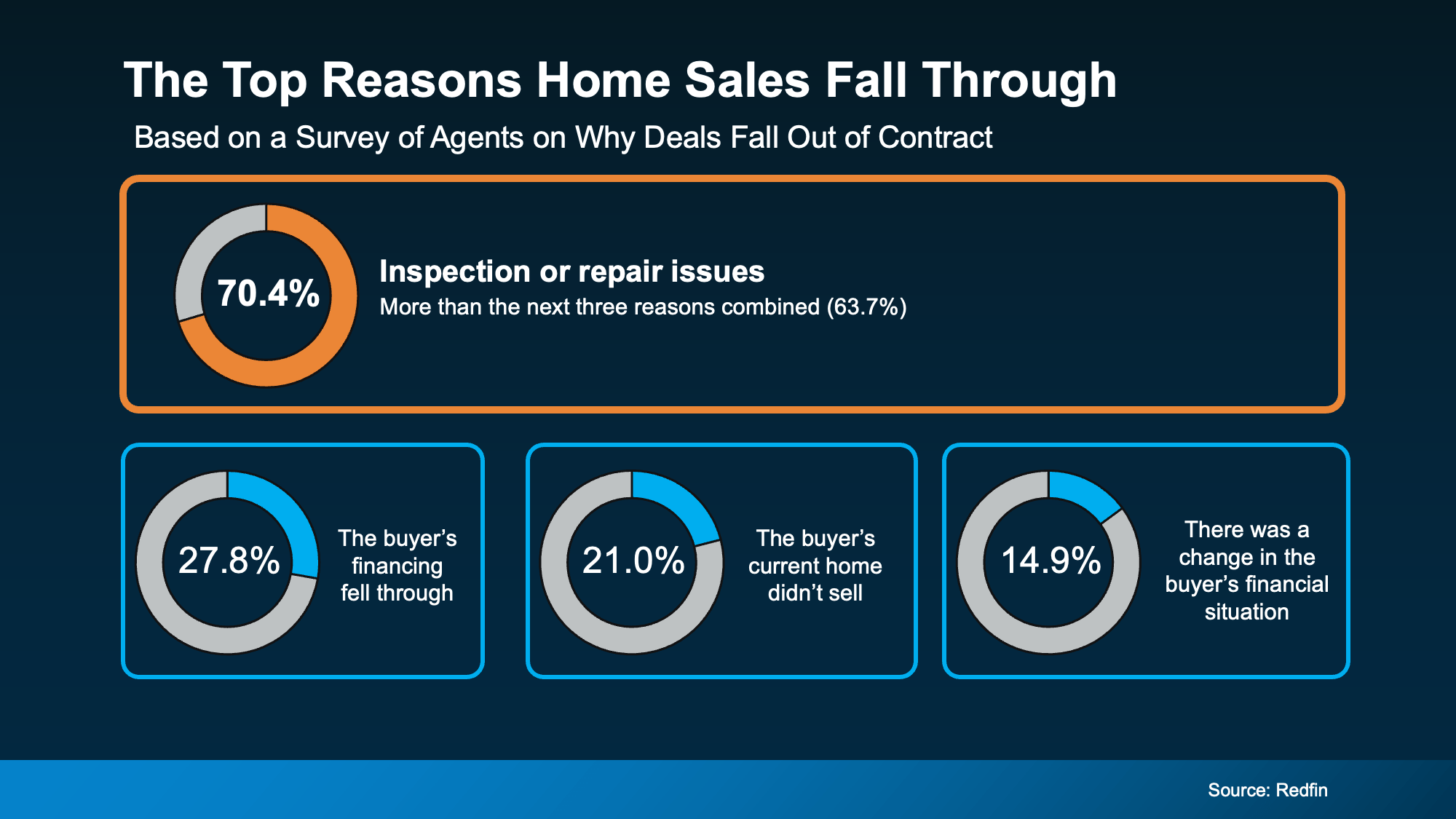
Inspection or Repair Issues
A home inspection can uncover concerns that were not obvious when the property was listed.
Depending on the purchase agreement, inspection period, and applicable contingencies, a buyer may request repairs, ask for a credit, negotiate other terms, or reconsider the transaction.
Common inspection concerns can involve systems or components such as:
The roof.
Plumbing.
Electrical systems.
HVAC systems.
Water intrusion.
Structural or safety-related concerns.
Other areas of the property.
This is one reason preparation before listing can be so valuable.
The Buyer’s Financing Changes
A buyer’s mortgage still has to make it through the lender’s approval process before closing.
Changes in employment, credit, debt, assets, income, or other financial circumstances can affect financing even after an offer has been accepted.
While sellers cannot control a buyer’s financing, reviewing the strength of an offer and understanding its financing terms can help you make a more informed decision.
The Buyer’s Home Does Not Sell
Some purchase offers are contingent on the buyer selling another property.
If that sale takes longer than expected or does not close, it could affect the timeline for your transaction.
This is an important reason to look beyond the purchase price when comparing offers.
Changes in the Buyer’s Financial Situation
A buyer’s financial circumstances can change during the transaction.
For example, taking on additional debt, changing jobs, opening new credit accounts, or making another major financial change could affect their ability to qualify for a mortgage.
Again, this is not something a seller can control, but it is something your real estate professional can help you evaluate when reviewing an offer.
Where Your Agent Can Make a Difference
Not every risk can be eliminated, but strong preparation can help reduce avoidable surprises.
Consider a Pre-Listing Inspection
A pre-listing inspection can help you learn about potential property concerns before your home goes under contract.
That gives you an opportunity to discuss your options with your real estate professional, determine which items may be worth addressing, and prepare accurate property disclosures.
You do not necessarily have to fix everything an inspection uncovers. The right approach depends on the property, the current market, the condition of the home, the likely cost of repairs, and your goals.
In Georgia, sellers should disclose known material or latent defects that could affect a property’s value or safety. Your real estate professional can help you understand the standard disclosure process, but sellers should also seek legal advice when they have questions about specific disclosure obligations.
Look Beyond the Highest Offer
The highest offer is not always the strongest offer.
When reviewing offers, there are several factors to consider, including:
Purchase price.
Financing type.
Down payment.
Inspection contingencies.
Appraisal terms.
Closing timeline.
Financing timeline.
Sale-of-home contingencies.
Requested seller concessions.
Other terms included in the offer.
A slightly different offer may sometimes provide a better overall fit depending on the seller’s goals and circumstances.
Your agent can help you compare the complete terms of each offer so you can make an informed decision.
Preparation Matters in Hinesville and Southeast Georgia
For homeowners in Hinesville, Fort Stewart, Richmond Hill, Midway, Ludowici, Jesup, Savannah, and surrounding Southeast Georgia communities, preparing your property before listing can help create a smoother transaction.
That may include:
Understanding your home’s current market value.
Identifying potential maintenance concerns.
Gathering important property records and documents.
Preparing accurate disclosures.
Reviewing your preferred timeline.
Discussing the types of offer terms that may best support your goals.
Local market conditions can vary from one community, price range, and property type to another. A strategy that works for one home may not be the right approach for another.
Bottom Line
Most home sales still make it to the closing table.
While no seller can control every part of a real estate transaction, you can control how prepared you are before accepting an offer.
A thoughtful pre-listing strategy, careful review of offers, accurate disclosures, and clear communication throughout the transaction can help reduce surprises and keep your sale moving toward closing.
Thinking about selling your home in Hinesville, Fort Stewart, or another Southeast Georgia community? Contact The Shanken Team to discuss how you can prepare before putting your property on the market.
The Shanken Team is committed to Equal Housing Opportunity and provides professional real estate services in accordance with federal, state, and local fair housing laws.