
Mid-Year Housing Market Update: What Changed in 2026 and What It Means for Southeast Georgia

If the housing market feels a little confusing right now, you're not alone.
Many buyers and sellers entered 2026 expecting lower mortgage rates, stronger affordability, and a more active housing market. Instead, rates have remained higher than many economists originally forecasted, and market activity has been slower than anticipated.
As a result, housing experts have updated many of their projections for the remainder of the year.
But what do these revised forecasts actually mean for buyers and sellers in Southeast Georgia?
Let's take a closer look.
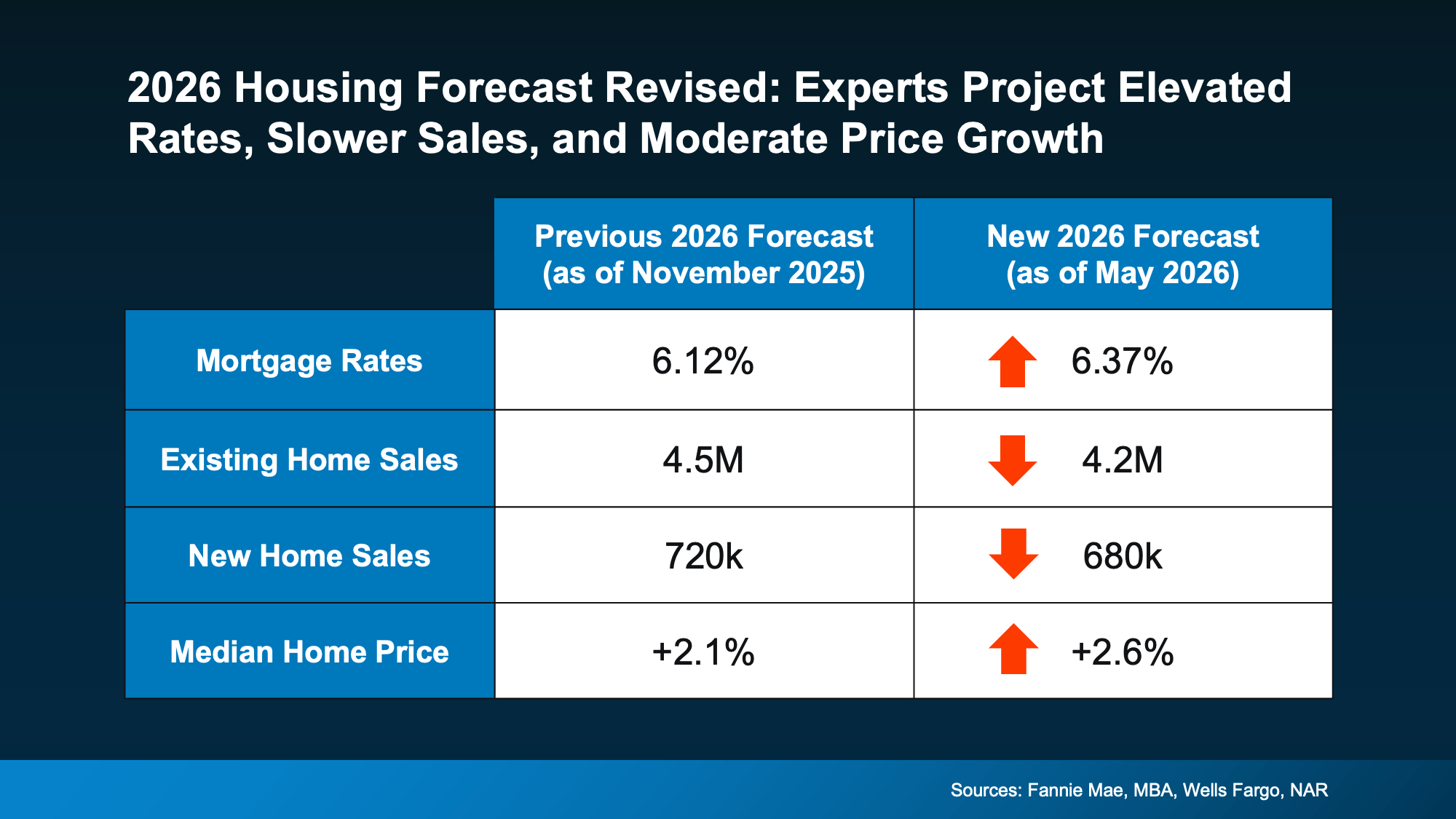
Mortgage Rates Are Expected To Stay Higher Than Originally Forecast
At the end of 2025, many economists anticipated mortgage rates would gradually move lower throughout 2026.
Instead, persistent inflation concerns, economic uncertainty, and global events have kept rates elevated.
Most major housing organizations now expect mortgage rates to remain in the mid-6% range for much of the year rather than falling into the lower range that many buyers hoped for.
While rates remain significantly higher than the historic lows seen during 2020 and 2021, they are still generally lower than they were during portions of 2024 and 2025.
For buyers waiting for a dramatic drop in rates, current forecasts suggest that substantial declines may not occur in the immediate future.
Existing Home Sales Have Slowed, But Demand Has Not Disappeared
Housing economists have also revised their projections for existing home sales.
The primary reason is simple: higher borrowing costs continue to affect affordability.
Many buyers, particularly first-time buyers, are taking more time to evaluate their options and determine what fits comfortably within their budget.
However, slower sales activity does not necessarily mean a lack of demand.
Throughout Southeast Georgia, buyer activity continues to be supported by:
military relocations,
PCS moves,
job-related transfers,
retiree migration,
and households experiencing major life changes.
Communities near Fort Stewart and Hunter Army Airfield continue to experience steady housing demand because many moves are driven by life circumstances rather than market timing alone.
New Construction Remains an Important Part of the Local Market
Nationally, economists have also adjusted expectations for new-home sales.
Higher mortgage rates have affected builder activity just as they have affected resale homes.
However, this may create opportunities for buyers.
In many Southeast Georgia communities, new construction continues to play an important role in available inventory. Builders often have flexibility that individual sellers may not have, including:
closing cost assistance,
interest rate incentives,
appliance packages,
and other promotional offerings.
For buyers considering areas such as Hinesville, Ludowici, Richmond Hill, Pooler, and surrounding communities, new construction may provide additional opportunities worth exploring.
Home Prices Continue To Show Resilience
One of the most important takeaways from current forecasts is that most economists still expect home prices to rise modestly on a national level during 2026.
While appreciation has slowed compared to the rapid gains seen during the pandemic housing boom, most forecasts do not anticipate a significant nationwide decline in home values.
A major reason is inventory.
Although housing supply has improved compared to recent years, available inventory remains below long-term historical norms in many markets.
That limited supply continues to provide support for home prices.
Local conditions can vary significantly from one community to another, but throughout much of Southeast Georgia, pricing has generally remained stable as buyers and sellers adjust to today's market conditions.
National Headlines Don't Always Tell the Local Story
One of the most important things buyers and sellers should remember is that national housing forecasts provide a broad overview, not a prediction for every individual market.
The factors influencing Southeast Georgia are often different from those affecting large metropolitan areas across the country.
Military activity associated with Fort Stewart and Hunter Army Airfield, ongoing population movement, new construction development, and local employment trends all contribute to housing demand throughout the region.
That's why understanding local market conditions is often more valuable than focusing solely on national headlines.
Bottom Line
The housing market has not rebounded as quickly as many economists originally expected in 2026, leading experts to revise several forecasts.
Mortgage rates are expected to remain higher than originally projected, and home sales have been slower than anticipated. At the same time, most forecasts continue to call for modest home price growth and ongoing market activity.
For buyers and sellers in Southeast Georgia, local factors—including military relocation activity, new construction opportunities, and steady housing demand—continue to play an important role in shaping the market.
If you're considering buying or selling this year, understanding what's happening in your local market can provide far more valuable insight than national headlines alone.